

For this years summer outing on 5 September 2026 we walked down the ‘corkscrew road’ from Bochruben to Inverfarigaig, through the Ballinchernoch area. The twenty three walkers enjoyed perfect weather to explore the history of a now very quiet part of the area, though in the 1840 census 180 people had lived here . We had a few stops, including the sites of the old meal mills along the Farigaig, the ruins of Tyantuie school, Castle Kitchie, St Moluag’s chapel & burial ground, Glaig an Amair then onwards the most welcome spread of cakes at the end of the walk, in the old Inverfarigaig forest school building now the heritage base, put on by Màiri, Margaret & Janet
Thank you Stratherrick & Foyers Community Trust for giving everyone a lift to the start of the walk with the community minibus and to Sharon for being on standby all day incase we needed a lift home.


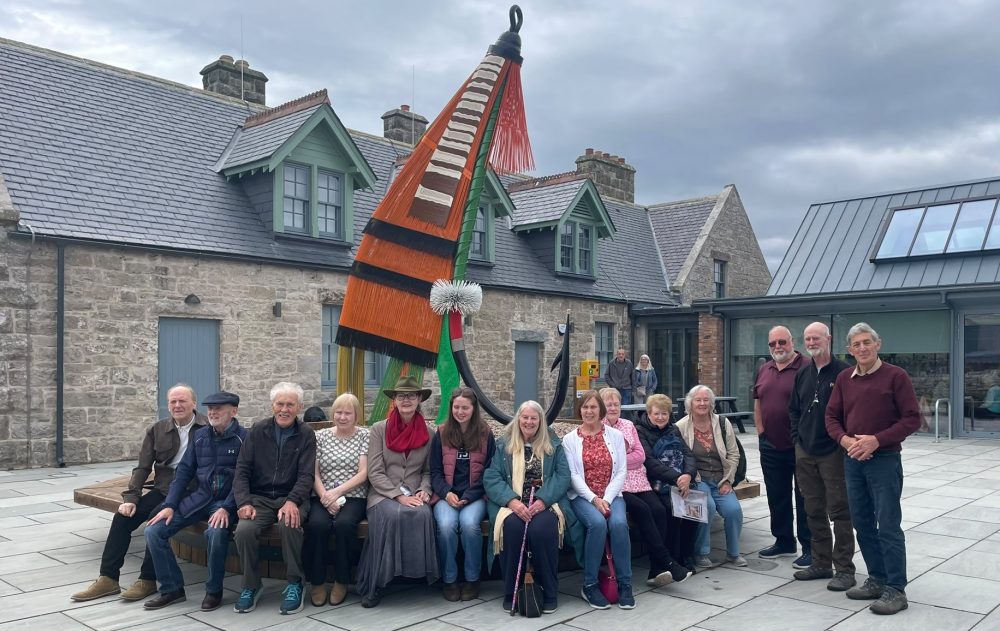
On Saturday, the South Loch Ness Heritage Group enjoyed a trip up North to visit Timespan Heritage Centre in Helmsdale and Brora Heritage Centre in the Old Clyne School building.
It was fascinating to discover how coal mining historically supported other major industries in the area, such as whisky distilling, salt production and weaving.
The weather was lovely and we even treated ourselves to some of Sutherland’s best fish & chips!
We have come back with lots of knowledge and new ideas, to hopefully be able to create something similar in Stratherrick.
We would like to thank Stratherrick and Foyers Community Trust for making this trip possible with the provision of the community minibus, and for our lovely drivers Steve & Gail!
On Friday evening May 1st 2026 the South Loch Ness Heritage Group held their Spring talk James Braidwood, “Father of the modern fire service”.
The speaker was Diana Hamilton Jones a GG granddaughter of James Braidwood.
Diana gave an insight to his early life in Edinburgh and his appointment at the age 24 following two major fires in Edinburgh in early 1824 as Superintendent & Master of Engines of the Edinburgh Fire Engine Establishment (the world’s first municipal fire service).
James recruited and trained men as firefighters adapted and invented fire-fighting equipment, including fire engines, hoses, ladders and uniforms.
By 1830 he wrote the first book in English on recruiting and training of firefighters and methods of fire- fighting which was adopted across the Britian, US and Australia.
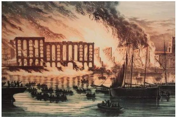
In 18932 James was head-hunted to lead the newly formed London Fire Engine Establishment, which in 16th October 1834 “The Day Parliament Burnt Down”, Jame’s expertise was crucial in saving the medieval Westminster Hall whilst the other buildings were destroyed.
James was tragically killed in June 1862 whilst leading his men on the first day fighting the Great Tooley Street Warehouses Fire, which raged for two weeks destroying millions of pounds work of merchandise.
Diana gave an excellent talk on this forgotten unheralded Scottish hero whose name should be synonymous alongside founders of other professions such as nursing’s Florance Nightingale the Police’s Robert Peel.
The talk was attended by several local firemen both present and past who helped produce a display board of local fire brigade pictures and fire artifacts to enhance the evening.
Dianas’ talk is available on the internet for those who missed it .
SOUTH LOCH NESS HERITAGE GROUP
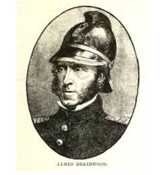
James Braidwood, “Father of the modern fire service”
A talk by Diana Hamilton Jones
On Friday 1st May at Stratherrick Hall at 7:30 pm
The world’s first municipal fire service was founded in Edinburgh on 23rd October 1824 and led by James Braidwood. Who was relatively unknown Scot who recruited and trained a team of fire fighters and, from a blank canvas, created a science in firefighting. Why has he been forgotten? We invite you to come to Diana’s talk to learn about him and why he should be remembered and honoured.
Admission free but a collection will be taken
On Monday 10th of November 2025 evening the South Loch Ness Heritage Group held their AGM, followed by a talk by Anne Fraser, Family Historian with the Highland Archive Centre on The Quirks of Family History Research. Anne who has been involved researching family history for over 30 years gave us a comprehensive insight into all the various sources available took us, to build up your family tree knowledge. Based on her father Hugh side of the family from Dores, she explained how Scotland’s People website through certificates for Birth, Marriage and Death along with census returns you could quickly build up a basic family tree. As most people are wanting to find out more than just the basics, Anne detailed other sources to look at such as Maps, Wills, Kirk session minutes, Cemetery gravestones, Newspaper, ect to build up a fuller picture of your ancestors’ life. Anne included antidotes of some of her findings which gave an insight to complexities of family relationships in the past. It was an excellent talk from a speaker who was extremely knowledgeably on the topic which kept the audience of over 50 people enthralled as every quirk was revealed.
For our second talk of the Autumn

Admission free but a collection will be taken
The South Loch Ness Heritage group are delighted to announce that we have acquired on a lease of one year , Foyers school as a Heritage Centre. The group have been trying for many years , to have a base to explore and show the rich heritage of the area. With great assistance from the Stratherrick and Foyers Community Trust ,we have a a base for where we can hopefully expand our knowledge of the district and on the future open the building to the general public .
see below for statement from Trust
Foyers Primary School
As most will know, Foyers Primary School has unfortunately been temporarily “mothballed” by The Highland Council (THC) for the last couple of years as a consequence of a lack of demand. It will remain so for approximately another twelve months, when THC will make a decision whether it will be permanently closed. This would be really rather sad, as the school has a long history and been a part of our community for many decades. In the interim, the good news is that The Highland Council has granted a Licence to SFCT on a “rolling basis”, pending the end of the mothballing period. This will enable a well-respected and longstanding group, the South Loch Ness Heritage Group (SLNHG), to utilise the building during this time. SLNHG have been searching for a “home” for a long time in order that they can gather and catalogue all their artefacts, documents and photographs and SFCT are delighted to support them with this opportunity. This group does really important work and they hope now to be able to display many items relating to the past in our area. The Highland Council very kindly granted SFCT the Licence for a nil licence fee and THC will even continue to maintain the exterior and insure the property. All SFCT has to do is look after the interior and to pay the utility bills. This is an excellent agreement for both parties, as leaving a building unoccupied inevitably leads to deterioration, so The Highland Council are happy, and the SLNHG have premises at minimal cost. This also means that the group can clear their porches, cupboards and under their beds of all the “stuff” they have been hoarding for years!! SFCT, and I’m sure all of us, wish the SLNHG the very best of luck in their new home and look forward to seeing the fruits of their labours! If you have any questions about any of this, please just drop us a line at SFCT.
Best wishes, Peter. Chair, SFCT.

1st Autumn Talk

The South Loch Ness Heritage Group had their summer event on Saturday 21st June 2025 “The Solstice Sail” up Loch Ness. From our vantage point of on the loch, we took in sites of interest between 2 miles north of Inverfarigaig to Knockie Boathouse. There were two group sailing times, one at 10 am and another at 12 noon, on the two 12-seater RIB boats provided by Malcom Stewart of Beastie Boats, located at Foyers Pier.
Prior to the Solstice Sail we had a short talk at the Boleskine Community Care Hub on places of interest we see on the trip. Those include the piers at Inverfarigaig and Foyers, Fraser Memorial, Boleskine Graveyard and House, BA Aluminium Smelter, Hydro Power Station and Dun Deardail. The speakers were Bob Main, Morag Macneil, John Townsend and Alister Chisholm.
The weather was good for the sails, the first one was slightly overcast but by the second the sun had come out and loch on both occasions was relatively calm. We travelled over the measured mile of John Cobbs fatal world water speed record attempt land in 1952 at a rather sedate 30mph compared with his over 200mph. At the relevant points along the sail the boats stopped, enabling us to view the points of interest including wildlife, Ospreys on their nest, and wild goats at Knockie Pier. At all those stopping points, the boat crew members Simon, Dave (Swampy) and Rab gave the groups additional information on the subject.
The Heritage group would like to thank the Boleskine Community Care and The Beastie Boats for their help in providing a memorable day out for all who attended.
 Leaving Foyers Pier
 Passing the Power Stationb
 At the Beaches
 Knockie Pier
 Knockie Pier Wild Goats
This year SLNHGs summer jaunt will be taking in sites of interest in the Foyers, Inverfarigaig and Knockie area viewed from the vantage point of Loch Ness.
We have arranged that, on the 21st of June Malcolm Stewart, who operates boat trips out of Foyers Pier, will take groups out in 12 seater open RIBs on a prearranged route. This will last just over an hour. (The outing will be weather (mainly wind) dependant but if necessary will be rescheduled a few days in advance using weather forecasting.)
Two departure times have been reserved, 10.00 and 12:00. The cost will be £15 per head.
To save description time on the trip we are planning to have a short presentation about the points of interest in the nearby Community Care Hub building (map ref. NH 4958 2105). It is estimated that these talks would take place approximately 45mins before each of the above times.
The Hub has parking, toilets and tea/coffee facilities.
If you are interested in joining us on the 21st June, please book a place/places soon as numbers are limited, and indicate your preferred time. If, when you reply, all places have already been reserved at your preferred time, please say if you would then accept the second choice. If all places at both times are already reserved we will put you on a waiting list for any cancellations.
Places are limited, so if you would like to take part, please reply to this email as soon as possible. Children under 16 must be accompanied by a parent or responsible adult.
If you are interested in the talk, but don’t wish to go on the boat, the times at The Hub will be 9.15am and 11.15am. No charge for the talk only, but donations to the group would be appreciated.
Payment for the boat trip will be by cash on the day.
To book your place/s please reply to this email address. janet.sutherland@talk21.com
Thank you, and we hope to welcome you to this event.